Out past the pavement
Irrigation Well Service
The electrical side of a farm or pivot irrigation well: the service run out to the wellhead, the panel and controls at the head, and underground conductors the length of the run.
The wellhead is usually a long way past the last pole
Most electrical work in Lubbock happens close to a panel someone can reach in a hurry, inside a wall or under a roof. A well job starts differently. The service has to be run out to wherever the wellhead actually sits, and on the farmland around Lubbock that is often well past the last power pole and the last piece of pavement. That means the conductors go underground for most of the distance, through ground that is dry clay for half the year and standing water the other half, and the panel and controls at the head have to be built to sit outside, in the weather, with nobody looking at them between visits. We have been running that kind of service work for a long time, feeding the pump, landing the controls, and burying the conductors the full length of the run.
What is actually at the wellhead
The pump is the whole point of the system. Everything upstream of it, the service, the panel, the underground run, exists to get power to that one motor reliably, because nobody is standing next to it when it stops. That changes how the panel and controls get built: protection that trips clean instead of nuisance-tripping on a hot afternoon, wiring landed so a farmer can see at a glance what happened if the pump does stop, and a run that survives being crossed over more than once. It is quieter work than a house call and it asks for more patience, because the failure that matters is the one nobody sees happen.
Baker Electric — Bonded and insured. Texas Electrical Contractor's License #17852. Call (806) 794-4683.
Distance and weather
A well job asks you to plan for the drive as much as the work.
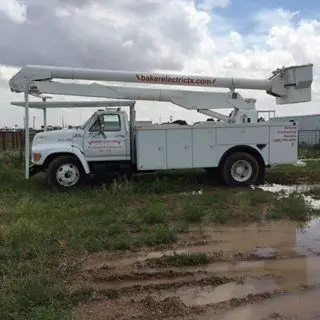
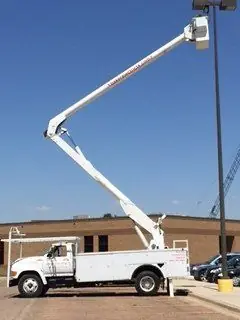
A house call is minutes from a panel someone can point at. A well is a different kind of job before a tool ever comes out of the truck: the distance out to the site, the condition of the ground the day the run gets dug, and the fact that the equipment has to keep working after the last visit, not just on the day it was installed. The bucket truck earns its keep on the overhead portion of jobs like this, when the feed comes off a line rather than out of the ground the whole way, and the same underground work that runs a service into a new building runs the conductors out to a wellhead instead. Between the two, most of what an irrigation well needs electrically is something we have already done more than once.
We list nine services on our own site, and this is the one hardly anyone else in Lubbock carries.
Why we treat this differently
The failure you cannot see happen is the one you plan for.
A house or a shop tells you fast when the power is out. A well out past the last field road does not, and by the time anyone notices, the crop or the herd depending on that pump has already gone without water. That is the difference we build for: a service run sized and buried to last, controls that are honest about what tripped and why, and work that holds up whether the truck comes back next week or next season. If you are not sure whether your setup counts as a well job or a straightforward service call, send us the details and we will tell you.